Why Crawl Space Vents Actually Make Moisture Problems Worse in Spartanburg SC
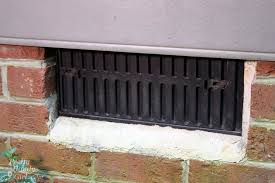
Most homes built in Spartanburg, Boiling Springs, Greer, Moore, Inman, and throughout the Upstate of South Carolina have at least a few old foundation vents in their crawlspaces. For decades, it was standard advice: “Open your crawl space vents to help it dry out in the summer.” But after years of crawling under homes all over this area, we can tell you with absolute certainty—open vents usually make moisture, mold, and musty odor problems worse in our climate, not better.
If you’ve noticed musty smells, damp insulation, or bouncy floors, there’s a good chance vented crawlspaces are to blame. Below, we’ll break down why traditional foundation vents fail in the humid Upstate, what problems you’ll see, and—most importantly—how modern crawl space vent sealing and crawlspace encapsulation really solve moisture issues here in Spartanburg and the surrounding areas.
Why Were Homes in South Carolina Built with Crawl Space Vents?
Older homes throughout Spartanburg, Boiling Springs, Greer, Moore, and Inman almost always have foundation vents. This was standard building practice based on the old belief that allowing air to move under the house would keep things dry by letting moisture escape. Builders cut open vents into the foundation and left dirt floors or thin plastic as a simple vapor barrier.
That idea comes from regions with dry climates. In Upstate SC, where humidity is high most of the year and red clay holds on to moisture, open vents have the opposite effect—they actually invite more humidity and moisture into the crawlspace.
Traditional thinking behind vents:
- Airflow under the house was thought to dry moisture out
- Vents would help with odors, mold, and pests
But our humidity and temperature swings make Spartanburg a completely different environment than the places this old building code was designed for.
How Humid Air Causes Condensation and Moisture Problems Under Homes
Here’s what’s really happening under your home when those vents are left open during a typical Upstate summer:
- Hot, humid air flows in from outside (often 88–95°F with 65–90% humidity)
- Your crawlspace stays several degrees cooler (ground and shade keep it lower)
- When humid air meets the cooler crawlspace and AC ducts, it turns into condensation
- Condensation forms on metal ducts, wood framing, pipes, and insulation—just like a cold glass of tea "sweats" on your porch
Instead of drying your crawlspace, vents act like moisture funnels all summer. We regularly measure crawlspace humidity at 75–90%, way above safe levels. That’s more than enough moisture for mold to grow and for insulation to start falling apart.
Why Vented Crawl Spaces Struggle During Upstate Summers
There are a few big reasons crawl space ventilation fails specifically around Spartanburg and the Upstate:
- High Humidity Season: For months, outdoor air is more humid than your crawlspace, so ventilation actually adds moisture, not removes it.
- Red Clay Soil: Red clay holds moisture and slowly releases it up into the crawlspace, especially after rain.
- Cold AC Ducts: Air conditioning ducts sweat when hit by humid air, leading to puddles—sometimes rendering insulation and wood beams wet for weeks.
- The Stack Effect: As warm air rises in your home, it pulls air up from the crawlspace. If the crawlspace is vented, that means more humid, musty air ends up right in your living space.
We see the same issues again and again across Spartanburg, Boiling Springs, Greer, and Moore—including neighborhoods like Converse Heights, Fernwood, and subdivision homes near Lake Bowen and Hwy 9.
Signs Your Crawl Space Vents Are Making Things Worse
- Persistent musty or earthy odor inside the home (especially after heavy rain or a humid week)
- Bouncy or uneven floors and wood floors cupping
- High indoor humidity and a sticky feel even with the AC running
- Fallen or wet insulation under the house
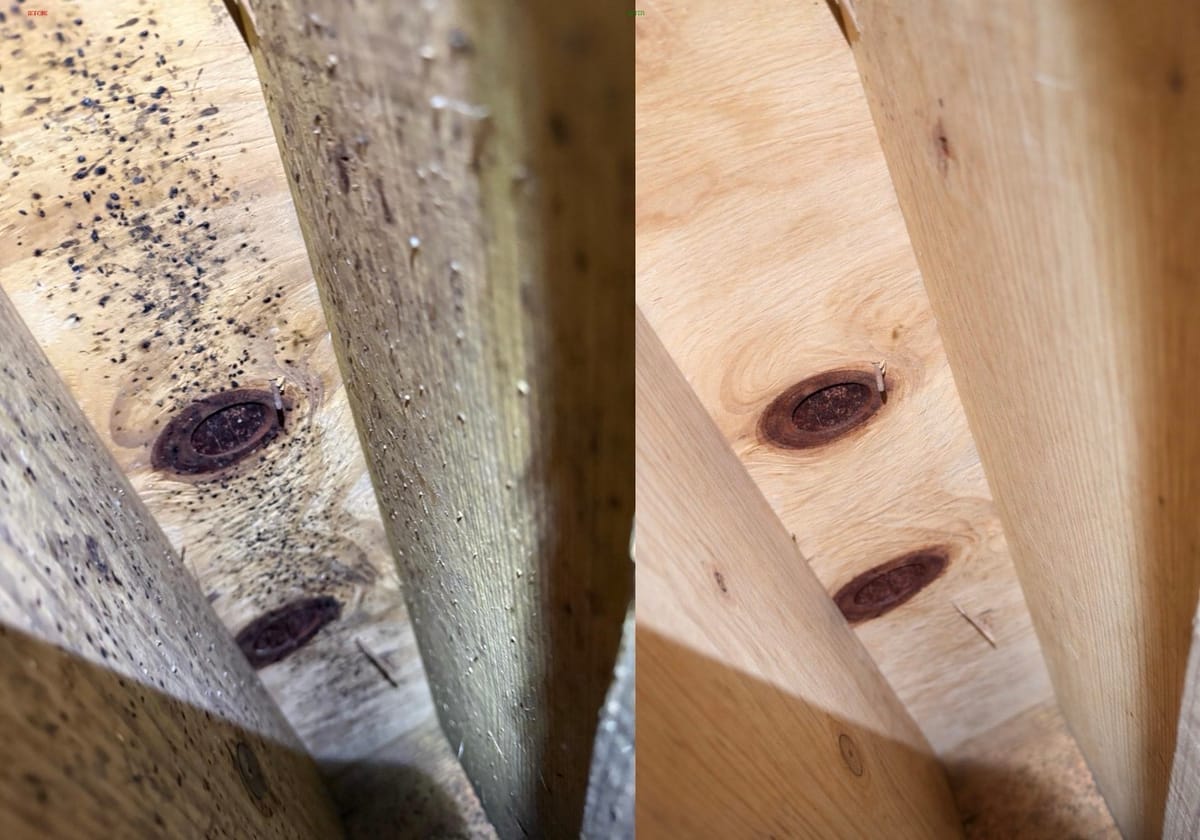
- Visible mold or mildew on wood, joists, or insulation facing
- Condensation droplets on HVAC ducts and pipes
- Standing water on vapor barrier or bare dirt under the home
These problems almost always get worse in summer, but you can spot them in winter too—often as cold, drafty floors or frozen pipes if vents are left open.
Mold, Insulation, and Wood Damage from Too Much Humidity
Once crawlspace humidity spikes, the problems start to multiply quickly. Here’s what we see most often during free crawlspace inspections throughout the Upstate:
Mold Growth
- Black, green, or white spotting on wood joists and subfloor
- Fuzzy growth on insulation facing
- Intense musty smell that seeps up into bedrooms and hallways
Insulation Damage
- Fiberglass batts absorbing moisture like a sponge
- Heavy, sagging insulation that falls out of the joists
- Mold growing inside insulation where you can’t see it
Wood Rot and Structural Issues
- Moisture readings over 20% in floor joists and support beams
- Sagging floors, doors that don’t close right, cracks in drywall
- In severe cases, expensive repairs needed for structural wood replacement
These problems don’t just ruin insulation—they threaten your floor system, indoor air quality, and home value.
How Crawl Space Vent Sealing and Encapsulation Solutions Work
If you want to put a permanent stop to crawlspace moisture, the answer in Spartanburg and the Upstate is a combination of crawl space vent sealing, vapor barrier installation, full crawlspace encapsulation, and a properly sized crawlspace dehumidifier.
Step 1: Crawl Space Vent Sealing
The first step in true crawlspace moisture control is to stop outside air from coming into the crawlspace. At JHS Crawlspace Specialist, our crawl space vent sealing process in Spartanburg SC involves:
- Inspecting all vents and removing rotted or flimsy covers
- Installing sealed, durable vent covers or inserts that block humidity, pests, and rodents
- Sealing edges completely—no more drafts, air leaks, or gaps
Step 2: Vapor Barrier Installation
Once the outside air is blocked, the next step is to handle moisture rising up from the ground. JHS Crawlspace Specialist’s vapor barrier installation in Spartanburg means:
- Clearing all debris and loose or old plastic
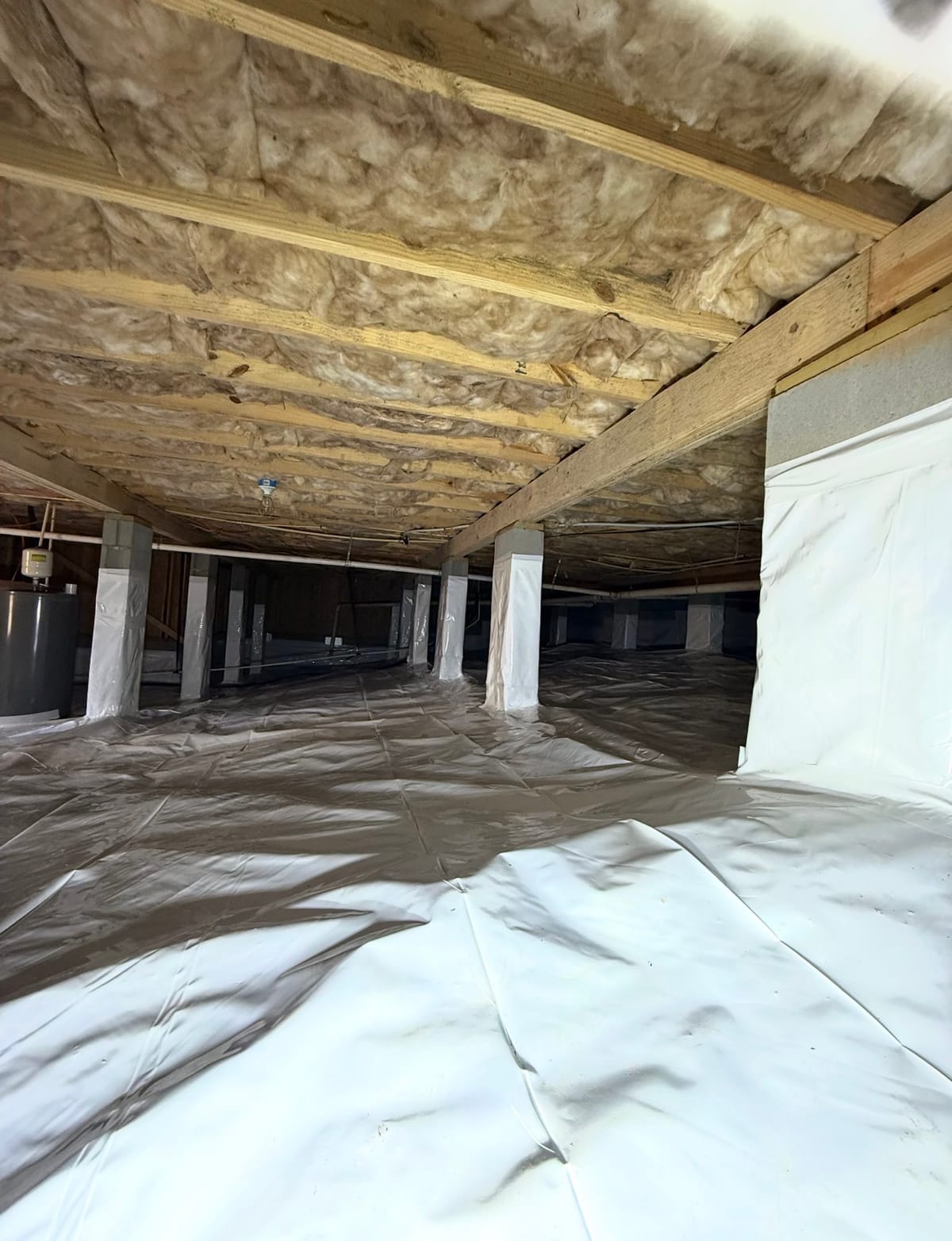
- Installing a heavy-duty, reinforced plastic liner across the entire crawlspace floor
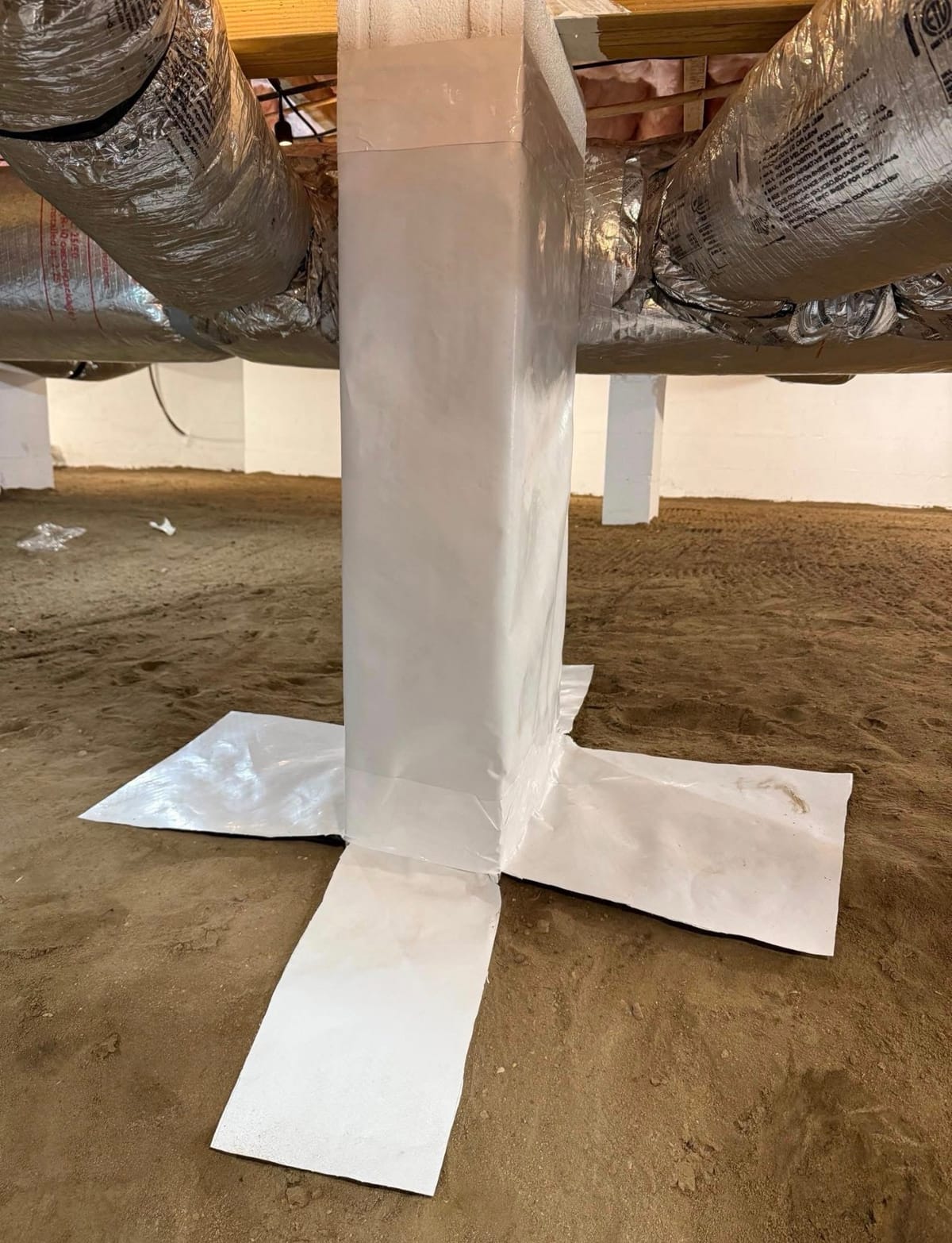
- Overlapping and sealing all seams and running the liner partway up walls and piers for a complete barrier
Step 3: Full Crawlspace Encapsulation
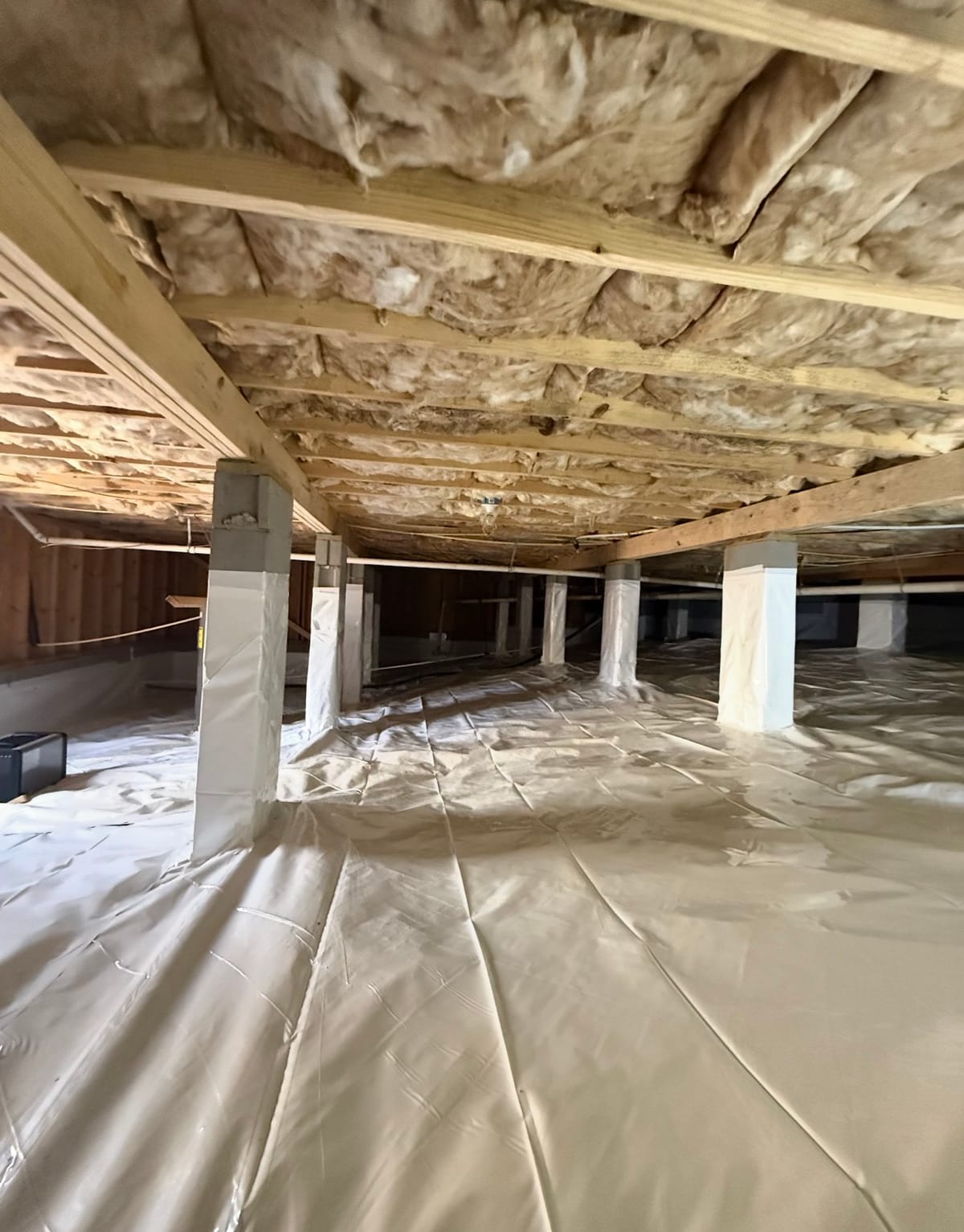
A true crawlspace encapsulation in Spartanburg SC ties everything together. That means:
- Vapor barrier sealed to walls, foundation piers, and crawlspace entry doors
- Every vent, seam, and gap sealed up tight
- Bright, clean, inspectable space that is healthier for your home and family
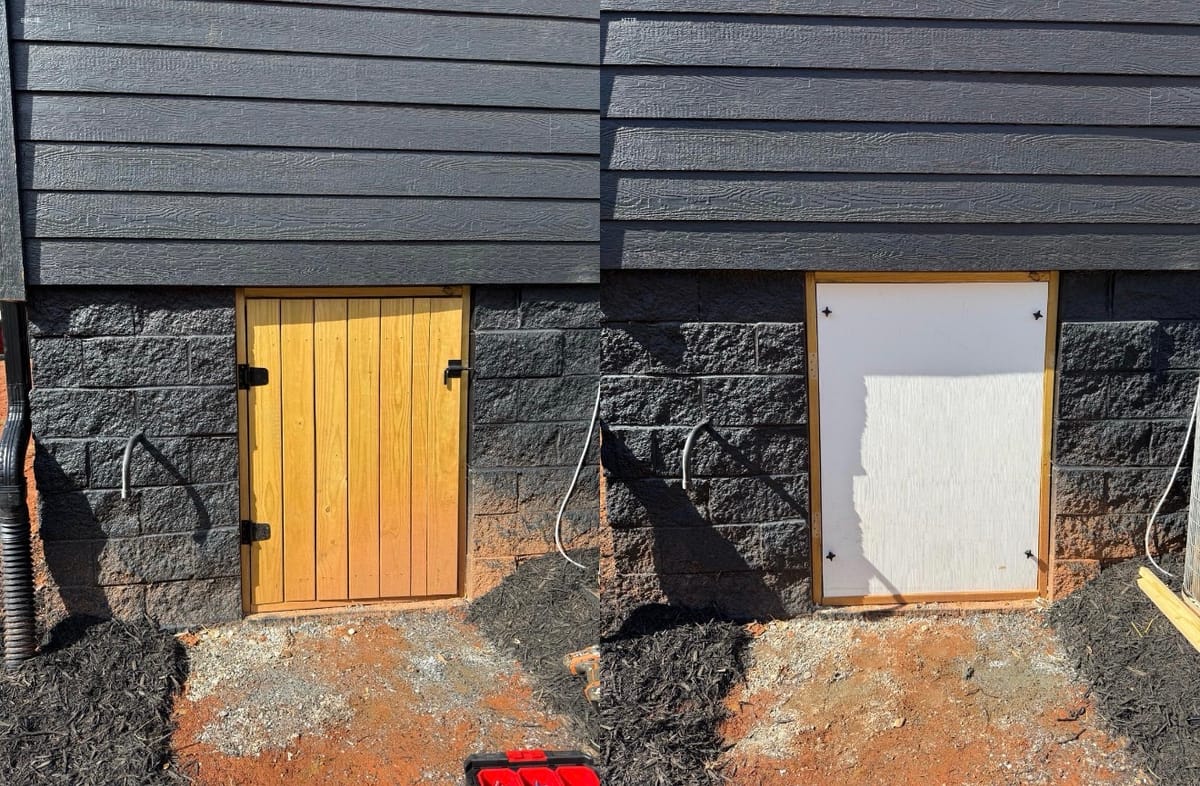
For some homes, we recommend pairing it with a custom crawlspace door for extra protection.
Step 4: Crawlspace Dehumidifier Installation
Once vents are sealed and the vapor barrier is installed, the last piece is managing humidity. Our professional-grade crawlspace dehumidifiers keep humidity consistently in the safe 45-55% range year-round. These units are:
- Built specifically for crawlspaces and the Upstate’s demanding climate
- Automatically drain water, so there’s no bucket to empty
- Sized correctly for your square footage and moisture load
This last step is what truly stabilizes the environment so mold can’t grow, insulation stays dry, and wood rot is stopped in its tracks.
Why Homeowners Call Us for Crawlspace Repair in Spartanburg, Greer, Boiling Springs, and Beyond
Whether it’s musty air, high humidity, mold under the home, or a bad CL100 report, most homeowners just want a permanent fix—and not another patch that fails when the weather turns. JHS Crawlspace Specialist only focuses on crawlspace repair in Spartanburg SC and throughout the Upstate, offering:
- Photo-documented, honest inspections
- Clear, pressure-free recommendations
- Full crawlspace encapsulation and vapor barriers
- Vent sealing and custom crawlspace doors
- Odor control and moisture treatments
- Professional-grade crawlspace dehumidifiers
See what local homeowners are saying by checking our Google reviews or looking at the before-and-after transformations in our project gallery.
Best Practices for Crawlspace Moisture Control in the Upstate
- Never rely solely on old vents for moisture control in our humid summers
- Inspect under your home yearly, especially after heavy rain
- Combine sealed vents, a heavy vapor barrier, and a crawlspace dehumidifier for real, lasting results
- Use honest, local crawlspace experts who explain every step and back up their work—not just salespeople
- If you’re unsure, start with a free inspection before committing to major repairs
For more detail on fixing musty odors and floor problems related to crawlspaces, you might also find our articles on common crawlspace odors and the value of encapsulation in Spartanburg helpful too.
Frequently Asked Questions
Should I close my crawl space vents in the summer and open them in the winter?
No. In Upstate SC, just opening and closing vents seasonally doesn’t fix moisture problems. The air outside is usually wetter than your crawlspace, and winter venting can freeze pipes. Sealing vents year-round is the best way.
Can I install a vapor barrier without sealing the vents?
It’s better than nothing, but open vents will still let in humid air, defeating the purpose. Both a vapor barrier and vent sealing are needed for proper crawlspace moisture control.
Do I really need a crawlspace dehumidifier after encapsulation?
Yes. Even the best sealant can’t keep all humidity out. Our dehumidifiers keep humidity in the safe zone and prevent future mold growth.
Will encapsulation help get rid of musty odors in my house?
Most of the time, yes. By eliminating excess moisture and sealing off outside air, encapsulation with dehumidification usually clears up odors. For severe cases, we also offer moisture and odor control treatments.
Is crawlspace encapsulation worth it if I’m selling my house soon?
Yes, especially in Spartanburg, Boiling Springs, Greer, and Inman. It can prevent delays or problems in real estate deals and preserve your home value.
How much does full crawlspace encapsulation or vent sealing cost?
Pricing depends on the size and condition of the crawlspace and how much repair is needed. Some jobs are a few thousand dollars, others more. The best way to know is to schedule a free on-site inspection and get a detailed, honest quote.
Ready for a Healthier Crawl Space? Get a Free Crawlspace Inspection
You don’t have to keep living with musty smells, mold, or high humidity under your home. Vented crawlspaces simply can’t keep up with the Upstate’s climate. That’s why modern building science now supports sealed and conditioned crawlspaces for homes throughout Spartanburg and the surrounding area.
If you’re in Spartanburg, Boiling Springs, Greer, Moore, Inman, or anywhere in the Upstate and are ready for a dry, healthy crawlspace, JHS Crawlspace Specialist is your go-to local expert.
- Crawlspace Encapsulation
- Crawl Space Vent Sealing
- Crawlspace Dehumidifiers
- Vapor Barrier Installation
- Moisture/Odor Control
Every consultation is honest, professional, and—best of all—completely free. Call or text (864) 804-9384 or request your free crawlspace inspection at jhscrawlspacespecialist.com today. Let’s restore peace of mind and true comfort, starting right underneath your home.