Water on Top of Your Crawl Space Vapor Barrier After Rain: What to Check
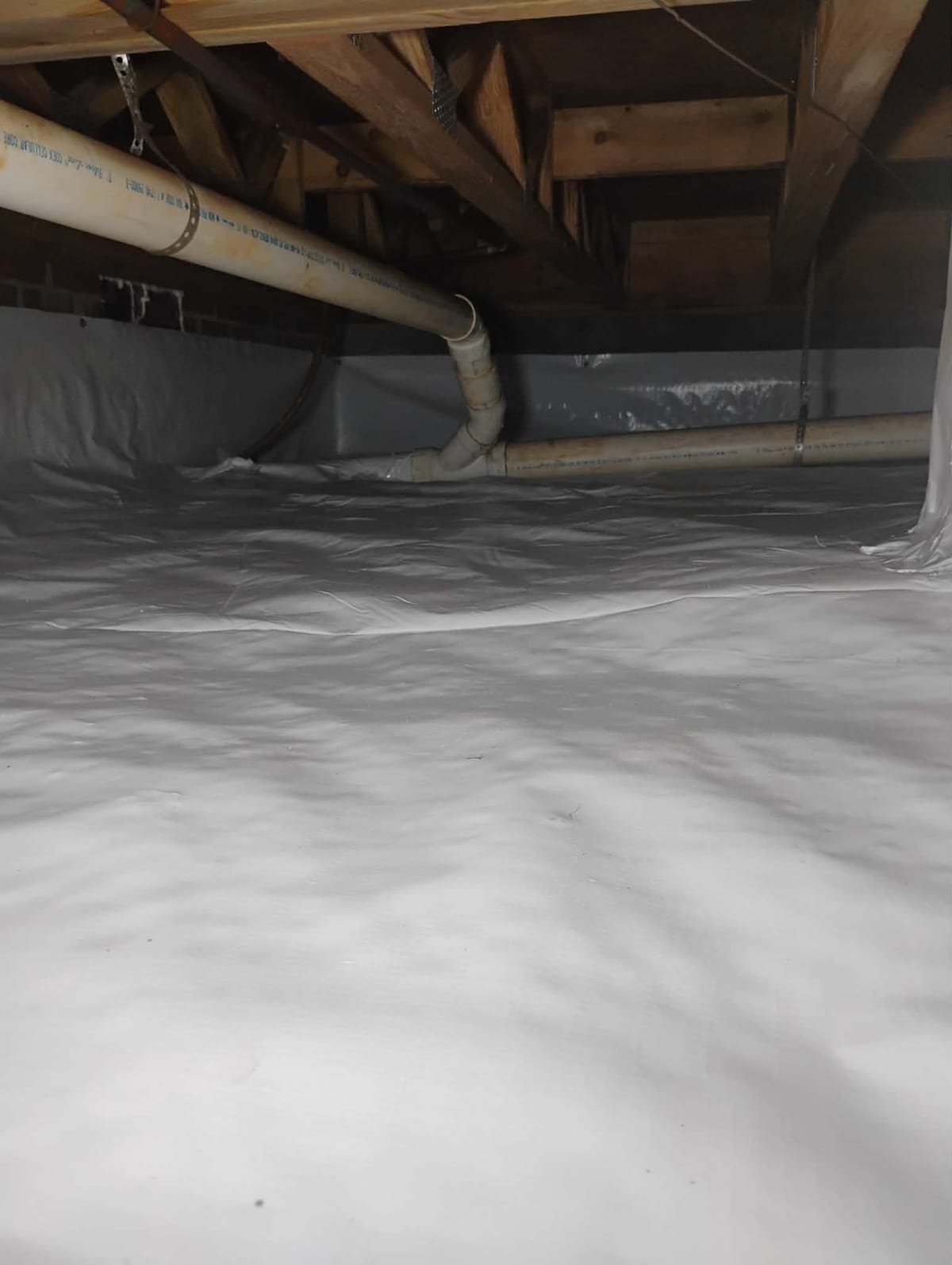
Water sitting on top of your crawl space vapor barrier is worth checking, but it does not automatically mean the liner has failed or that you need full encapsulation. The first question is simple: where is the water coming from?
A ground vapor barrier helps limit moisture vapor rising from the soil. It is not a substitute for managing liquid water coming in from outside or leaking from equipment above it. For homeowners in Spartanburg, Greenville, and the surrounding Upstate, finding that source comes before choosing a repair.
Start with when the water appears
If puddles show up after rain, the inspection should include the outside of the house. Overflowing gutters, downspouts discharging beside the foundation, ground sloping toward the house, and low crawl space openings can all be clues. Water can travel before it collects, so the puddle may not sit next to the entry point.
If the area stays wet through dry weather, plumbing and air-conditioning condensate drains also deserve attention. Rainwater and a plumbing leak can happen at the same time. Timing helps narrow the search, but it does not prove a cause by itself.
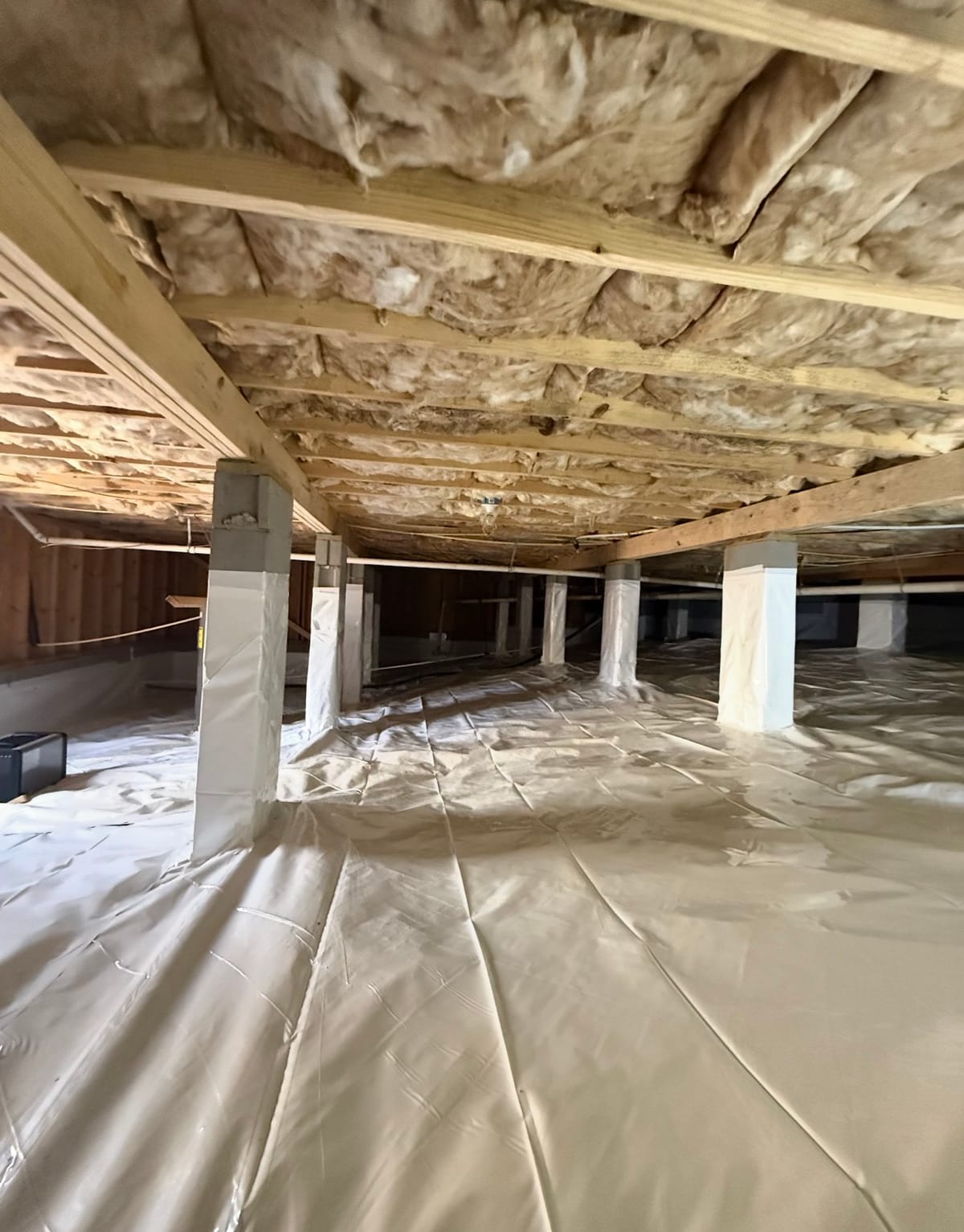
Crawl space reference photo. A photo alone cannot identify the source of a water problem.
Check above the liner, not just around the foundation
A wet spot beneath a pipe or HVAC equipment may come from above. A leak can drip onto the plastic and run to a lower area before becoming noticeable. That is why replacing the liner without finding the source can leave the original problem untouched.
During an inspection, visible pipes, drain connections, and equipment should be considered alongside exterior drainage. A plumbing or HVAC problem may need the appropriate trade to make the repair.
Water on top and damp soil underneath are different clues
Damp soil beneath the plastic alone does not prove the vapor barrier has failed. Standing water beneath it, a liner floating above the ground, recurring puddles on top, or damaged seams still need evaluation.
Do not cut holes in the liner to drain a puddle or cover the water with another layer of plastic as a quick fix. Neither step identifies why the water is there. A dehumidifier is not a replacement for correcting a continuing liquid-water source, either.
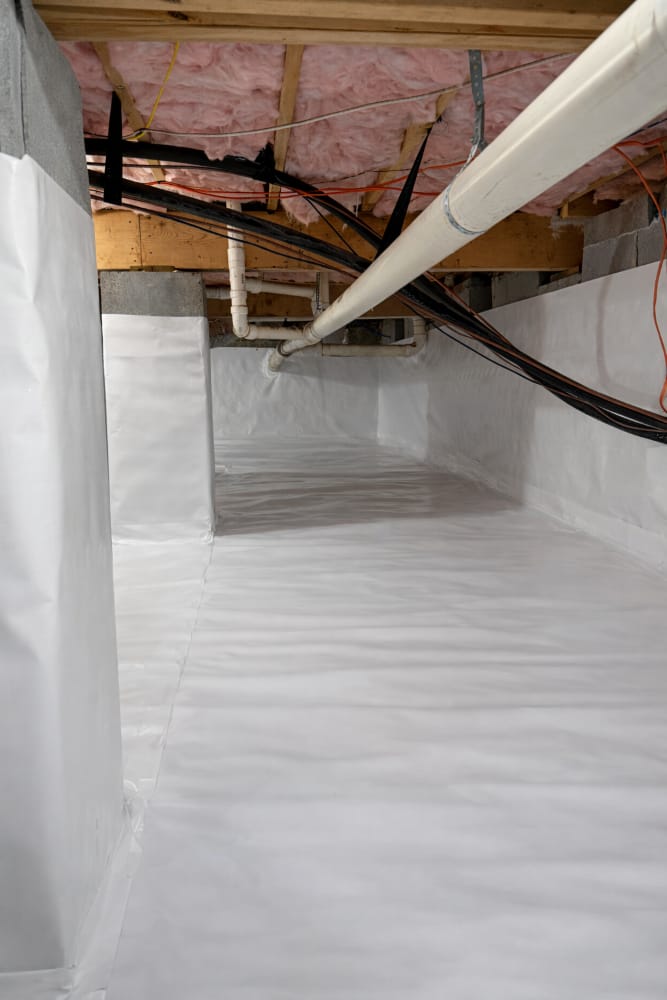
Reference photo showing why an inspection considers both the liner and the equipment above it.
What you can document safely
- When it last rained and when you first noticed the water.
- Whether the same area gets wet during dry weather.
- Where water is visible from a safe access point.
- Where downspouts discharge and whether gutters overflow, observed from the ground.
- Any recent changes to landscaping or drainage.
Photos from a safe access point can help explain the problem. Do not enter standing water under the house, especially where electrical equipment or wiring may be present. You do not need to crawl into a wet area to prepare for an inspection.
Find the cause before choosing the fix
At JHS Crawlspace Specialist, the recommendation should follow what the inspection finds. That might mean correcting runoff, repairing a leak, addressing a damaged liner, or evaluating drainage and a sump system when conditions call for them. Not every home needs full encapsulation.
Our crawl space waterproofing service page explains the service side. The starting point is still understanding your particular water problem.
I'm Nathan Johnson, owner of JHS Crawlspace Specialist. If water keeps collecting under your home in Spartanburg, Greenville, or the surrounding Upstate, call 864-804-9384 or request an inspection. We can look at what is happening and explain the options without pressure.