Does Your Crawl Space Need Drain Tile, a Sump Pump, or Both?
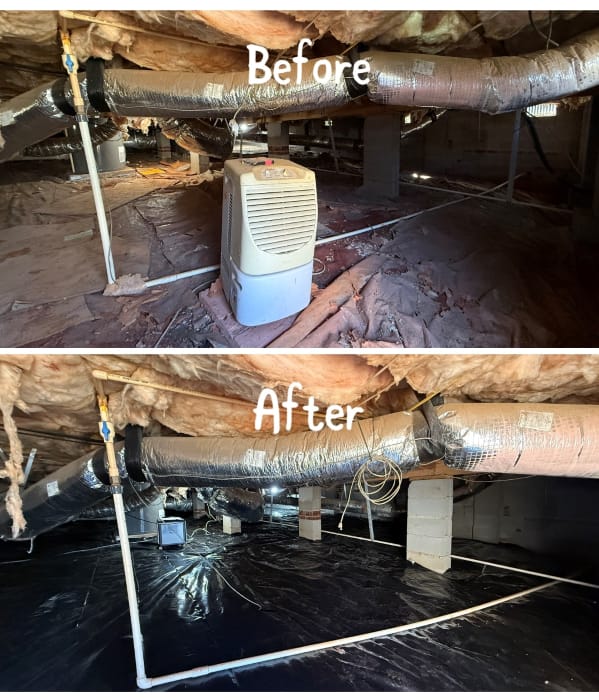
Finding standing water under your home raises a fair question: do you need a drainage system, a sump pump, or both? Those parts do different jobs. The right answer depends on where the water enters, how it moves, and where it can safely leave the property.
For homeowners in Spartanburg, Greenville, and the surrounding Upstate, an inspection should answer those questions before a repair plan is chosen. A puddle alone is not a complete diagnosis.
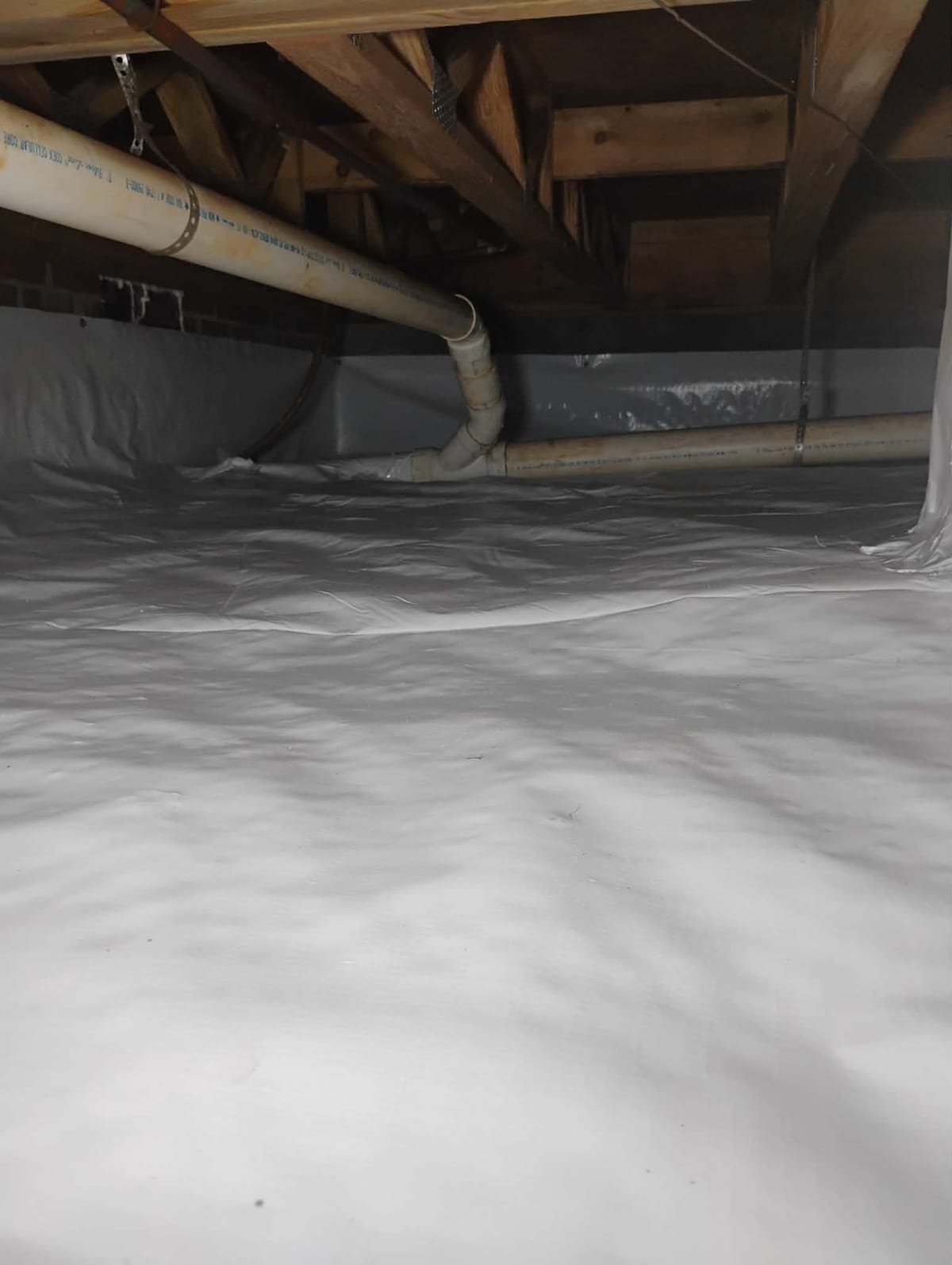
Reference photo showing a lined crawl space with plumbing overhead.
What drain tile does
“Drain tile” usually means a drainage pipe system rather than floor tiles. Its job is to collect water and give it a route toward an outlet or collection point. Depending on the property, drainage may be outside the foundation or within the crawl space.
A drain does not make water disappear. Its route and outlet matter. A pipe with no suitable discharge path is an incomplete plan, even if the trench looks neat.
What a sump pump does
A sump pump removes water that reaches its collection basin and sends it through a discharge line. The pump and basin need to work with the way water actually travels through the space.
Placing a pump in one corner does not mean water trapped elsewhere will reach it. Where gravity drainage is practical, a pump may not be necessary. Where a suitable gravity outlet is unavailable, pumping may be part of the solution.
When the two work together
If water collects along the perimeter or across separate low areas, the inspection may support a collection system that directs it toward a sump basin. The drain collects and routes the water; the pump moves the collected water out.
That is a reason a quote may include both. It is not a reason to recommend a full perimeter system for every wet crawl space. The extent of drainage should follow the findings, access, elevations, and discharge options.
Check the source and discharge first
Roof runoff, downspout outlets, the slope beside the house, and low access openings deserve attention. A plumbing or equipment leak needs a different repair from recurring ground or rainwater intrusion. When water appears and where it starts help narrow the inspection.
The discharge location is just as important. Sending water beside the foundation can let it return. The route needs to suit the property and applicable local requirements, rather than simply ending at the closest wall.
Drainage and encapsulation solve different parts of the problem
A ground vapor barrier limits moisture vapor from the soil. It is not a substitute for managing standing water. A dehumidifier controls moisture in the air rather than removing puddles from the floor.
Where encapsulation is appropriate, liquid-water problems need to be addressed as part of the plan. Some homes need a focused drainage or runoff correction. Others may benefit from additional moisture-control work. Not every home needs full encapsulation.
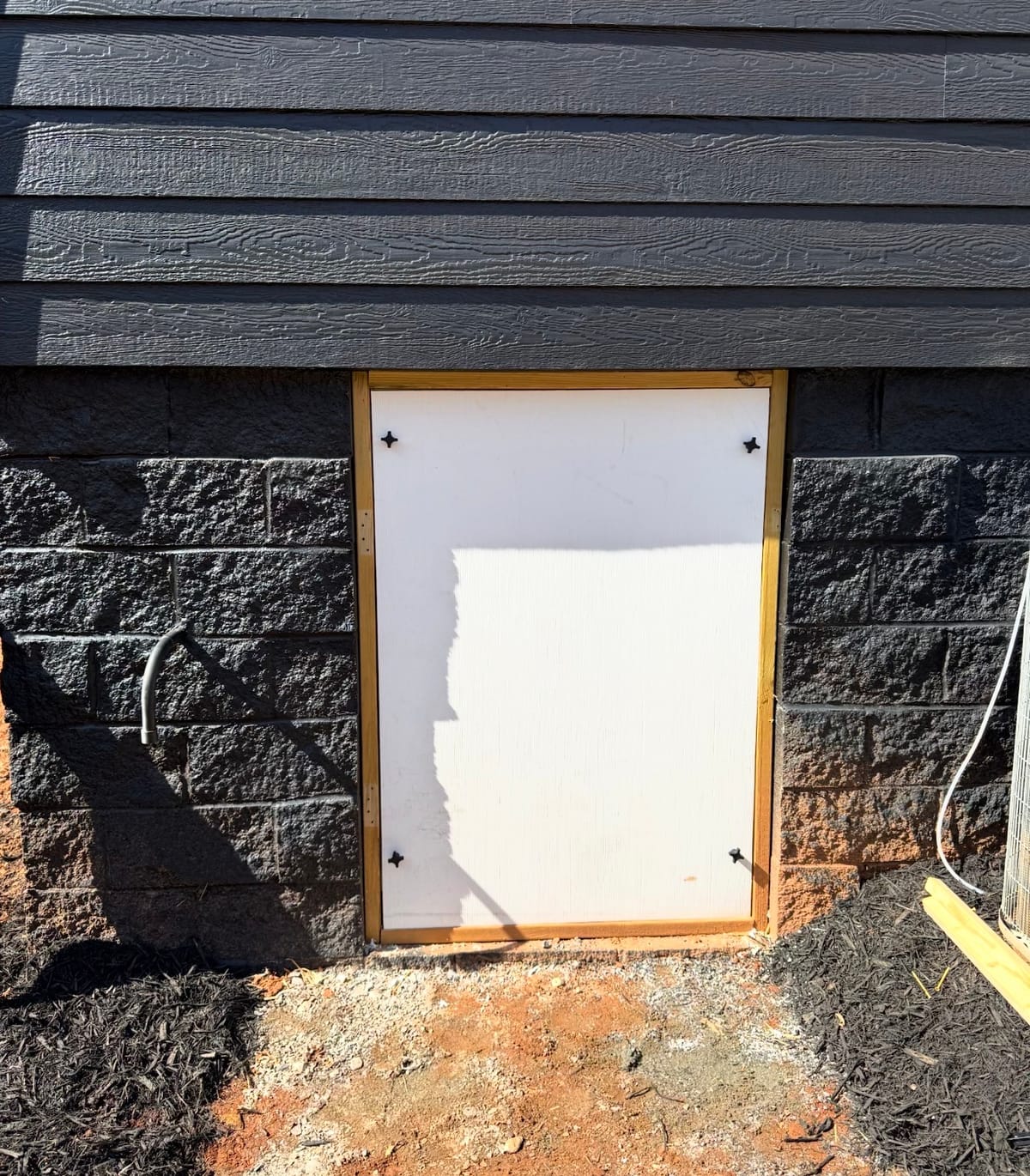
A water-source inspection considers access openings and surrounding drainage as well as conditions beneath the house.
Questions worth asking before approving a quote
Ask where water will be collected, how it reaches the basin or outlet, where it discharges, and what access is available for maintenance. Ask what the recommendation is based on and which issues the proposed work will address.
If you already have a pump, share whether it runs, whether water remains elsewhere, and when the problem occurs. Photos from a safe access point can help. Do not enter standing water beneath the house, especially around electrical equipment.
Learn more about JHS crawl space waterproofing and our inspection process.
I'm Nathan Johnson, owner of JHS Crawlspace Specialist. If you need help sorting out crawl space water in Spartanburg, Greenville, or the surrounding Upstate, call 864-804-9384 or request an inspection. We will explain what we find and the options that fit your home, without pressure.