How Should Crawl Space Encapsulation Fit Around Uneven Piers?
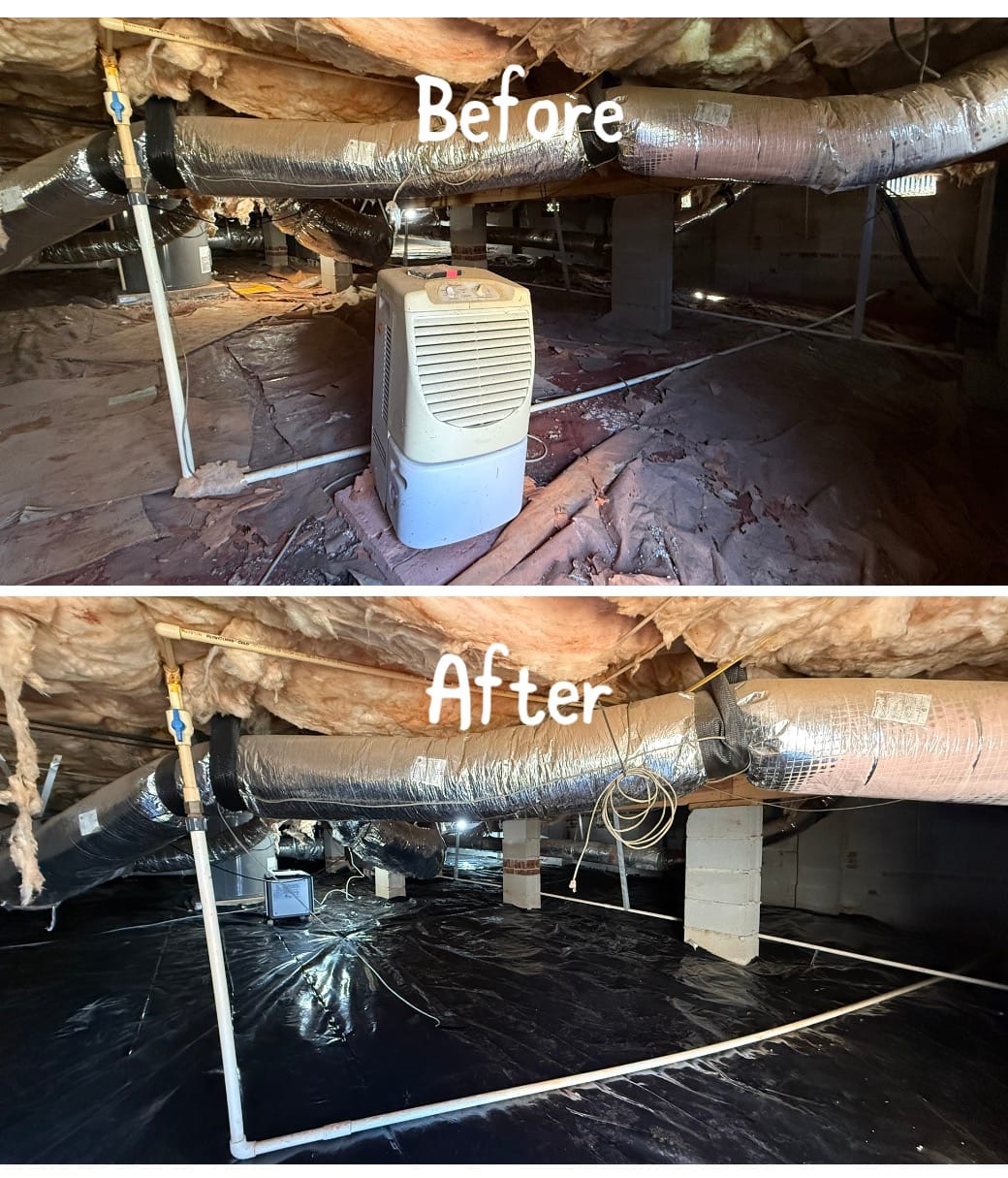
Crawl space encapsulation should fit around an uneven pier without leaving exposed soil or an unsealed break in the ground vapor retarder. The liner needs a planned connection at the pier, with overlapping joints sealed using materials approved by the liner manufacturer. A tidy floor alone does not tell you whether those connections are sound.
I’m Nathan, owner of JHS Crawlspace Specialist. While our crew was working in Spartanburg, I pointed out a detail we run into under homes: crawlspace piers are not all perfectly shaped. That is a useful reminder for homeowners across Spartanburg, Greenville, and the Upstate. Masonry can have rough faces, offsets, and corners that call for careful fitting rather than a loose opening around each support.
What the liner is supposed to do
A ground vapor retarder is material placed over the crawlspace soil to limit moisture vapor coming up from the ground. In an encapsulated crawlspace, that groundcover is part of a connected moisture-control system. The aim is a continuous groundcover, with sealed seams and planned connections to walls and piers. The point is continuity across the soil and at the places where the liner meets other surfaces.
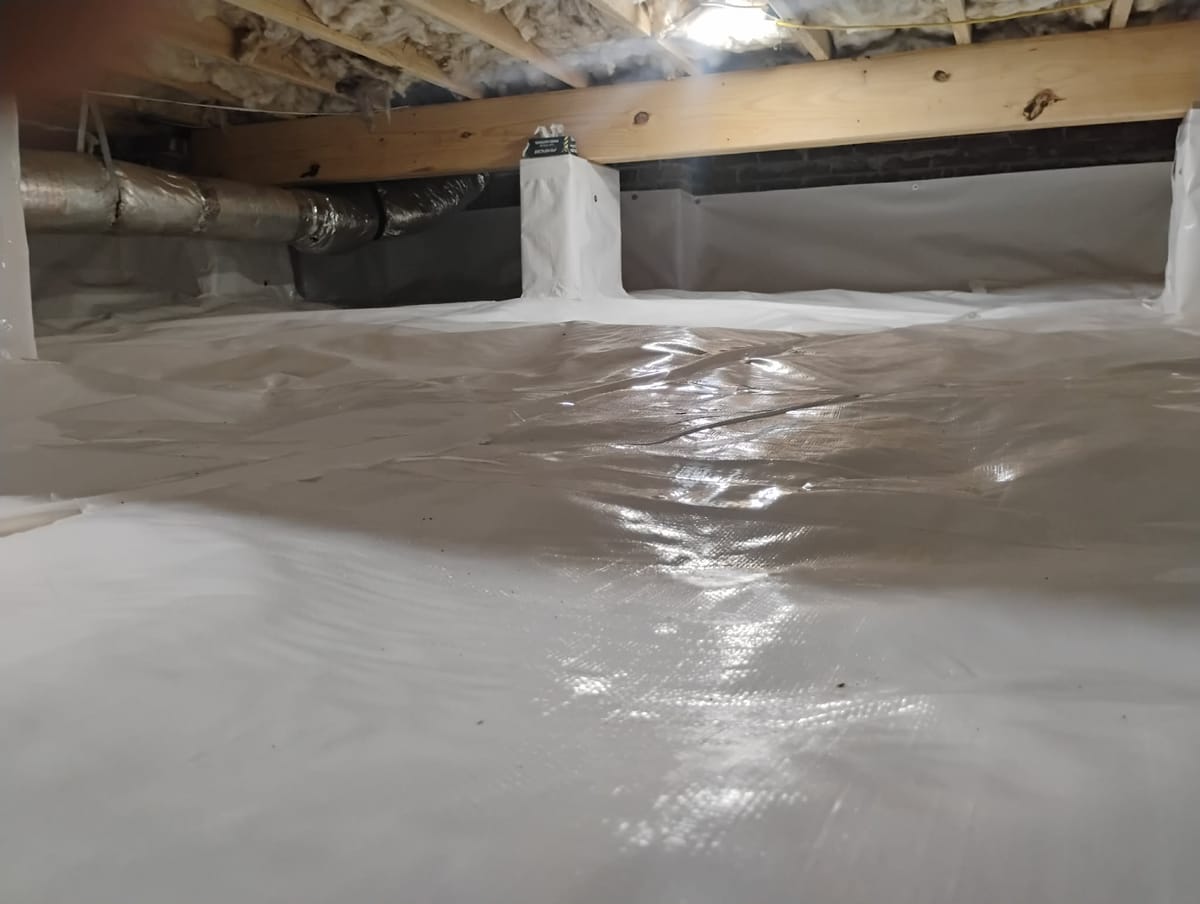
That does not mean pulling one sheet tightly across every awkward corner. At an irregular masonry pier, the installer needs to account for its actual shape. Where a single piece cannot make a reliable connection, additional liner material can form a fitted detail. Joints should overlap and be sealed with compatible, manufacturer-approved materials. The appropriate detail depends on the liner system and the surfaces found during inspection.
What we check around an uneven pier
At JHS Crawlspace Specialist, we would rather spend time reviewing a connection than rely on how bright or smooth the middle of the floor looks. The areas worth checking include:
- The pier base: Does the groundcover meet the support without an open patch of soil around it?
- Corners and changes in shape: Are folds and added pieces fitted so the seal is not relying on a loose edge?
- Overlaps: Are adjoining pieces joined with materials compatible with the liner, following the manufacturer’s directions?
- Nearby transitions: Do wall connections and other seams receive the same attention as the pier?
This is a review of moisture-control work, not a way to judge whether a pier is structurally sound. Before covering the ground, the crawlspace needs an inspection for conditions that a liner cannot fix. A damaged or unstable pier calls for appropriate evaluation; plastic does not repair a support. Likewise, standing water or other bulk water entering the crawlspace needs its source addressed. Sealing a liner over an unresolved water problem is not a substitute for that work.
Keep the space inspectable
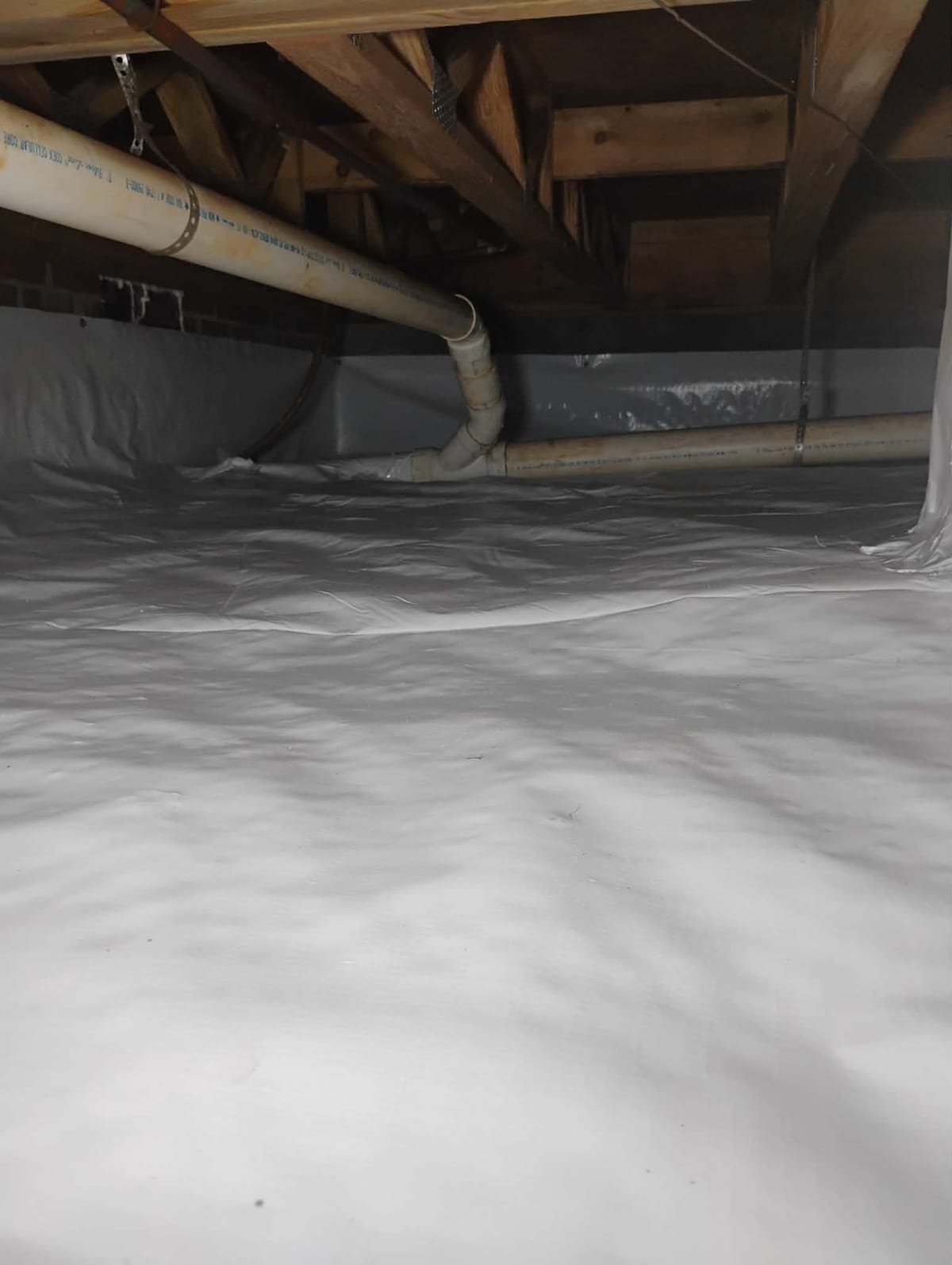
A sealed system still has to allow required termite inspection visibility and practical service access. Liner placement should not conceal areas that need to be seen or block access to equipment and utilities. Those details depend on the home and applicable inspection requirements, so there is no single gap dimension to apply to every pier or wall.
Not every uneven pier calls for full crawlspace encapsulation. If the existing groundcover is otherwise serviceable, a limited liner repair or better-sealed connection may be enough. If the moisture issue is broader, we can explain why a more complete approach may make sense. The inspection should guide that choice, not the appearance of one corner.
If you want an honest look at the liner and piers under your Upstate home, contact JHS Crawlspace Specialist. To talk it through with Nathan, call 864-804-9384.