Where Does Crawl Space Drain Tile Send the Water? Why the Discharge Matters
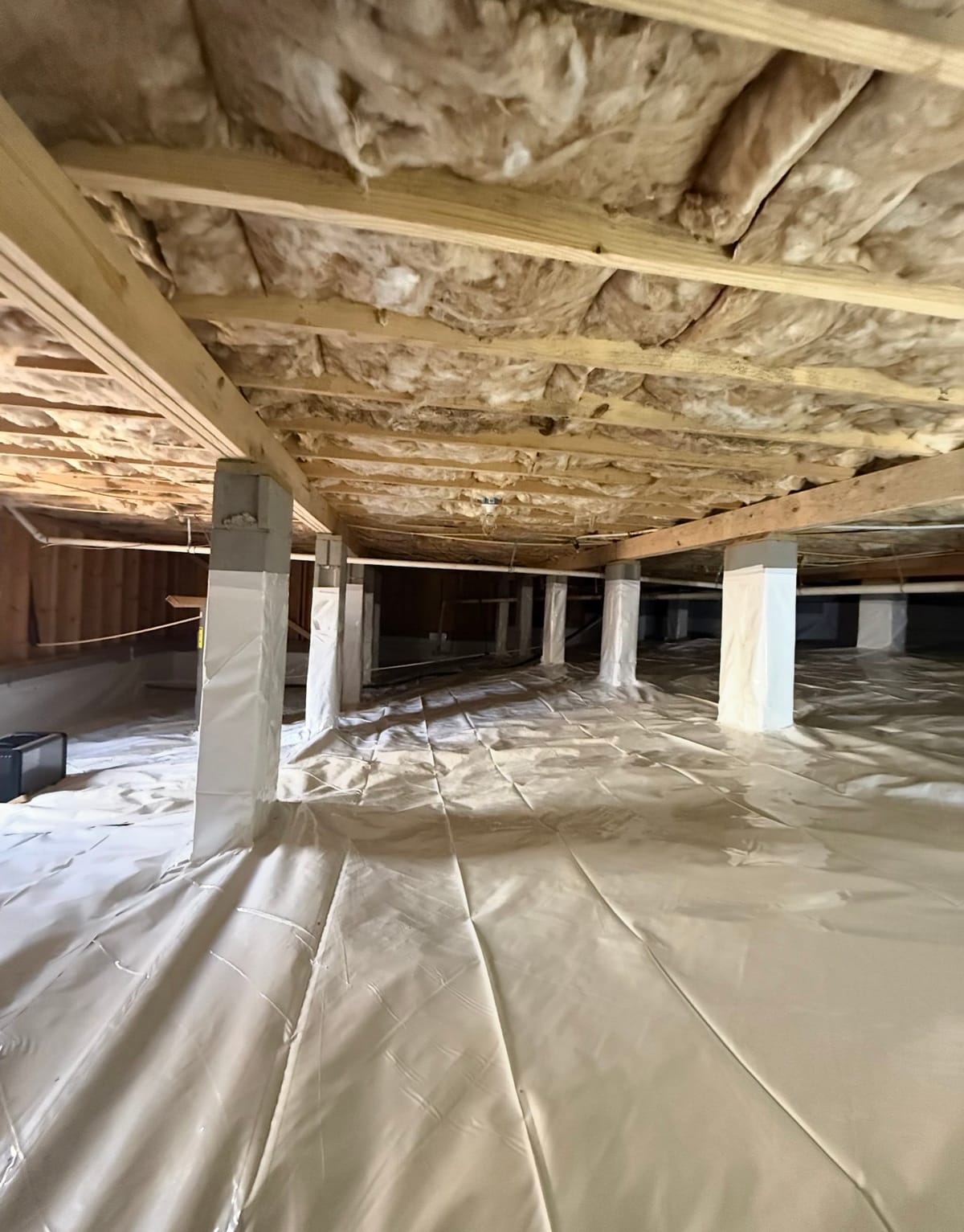
I’m Nathan Johnson with JHS Crawlspace Specialist. When we talk about crawl space drain tile, I want homeowners to understand where the collected water will go. Water may flow by gravity to a daylight outlet where the site permits, or a sump pump may move it through a discharge line where gravity is not practical. Either way, the outlet must be planned so water does not return toward the foundation or cause problems elsewhere.
That is why I ask homeowners to look beyond the pipe under the house. A drainage proposal should show the entire route, from where water is collected to where it leaves the property’s immediate foundation area. If someone tells you the water will simply go “outside,” ask where outside.
Check the source and the surrounding ground
Before recommending crawl space drainage, I look at the ground slope around the home, where gutters and downspouts release roof water, and how water appears to be reaching the crawl space. Those observations matter because a new drain should not become a substitute for correcting an obvious source of water against the foundation.
Drain tile collects water that reaches it. It does not make that water disappear. The discharge route should carry it away from the foundation to an appropriate, permitted location without sending it back toward the house or onto an area where it could harm property. There is no universal number of feet that makes every outlet safe. The grade, available route, and receiving location all matter.
Follow the discharge path in the quote
A gravity outlet depends on a usable downhill path to daylight. Where that path does not fit the site, a sump discharge may be appropriate. Neither choice answers the most important question by itself: where will the water actually end up during rain?
I would ask these questions before approving any crawl space drainage quote:
- “Can you show me the proposed outlet?”
- “How does water get from the collection pipe to that outlet?”
- “During heavy rain, could water flow back or collect near the foundation?”
- “What could block the outlet, and what maintenance will I need to do?”
- “What discharge work is included in this price?”
A clear answer lets you judge the whole system instead of comparing quotes by pipe length alone. JHS Crawlspace Specialist completed 80 feet of drain tile in Chesnee on October 28. Pipe length is only part of a drainage plan. The collection route and discharge destination need to fit the home.
Match the work to the problem
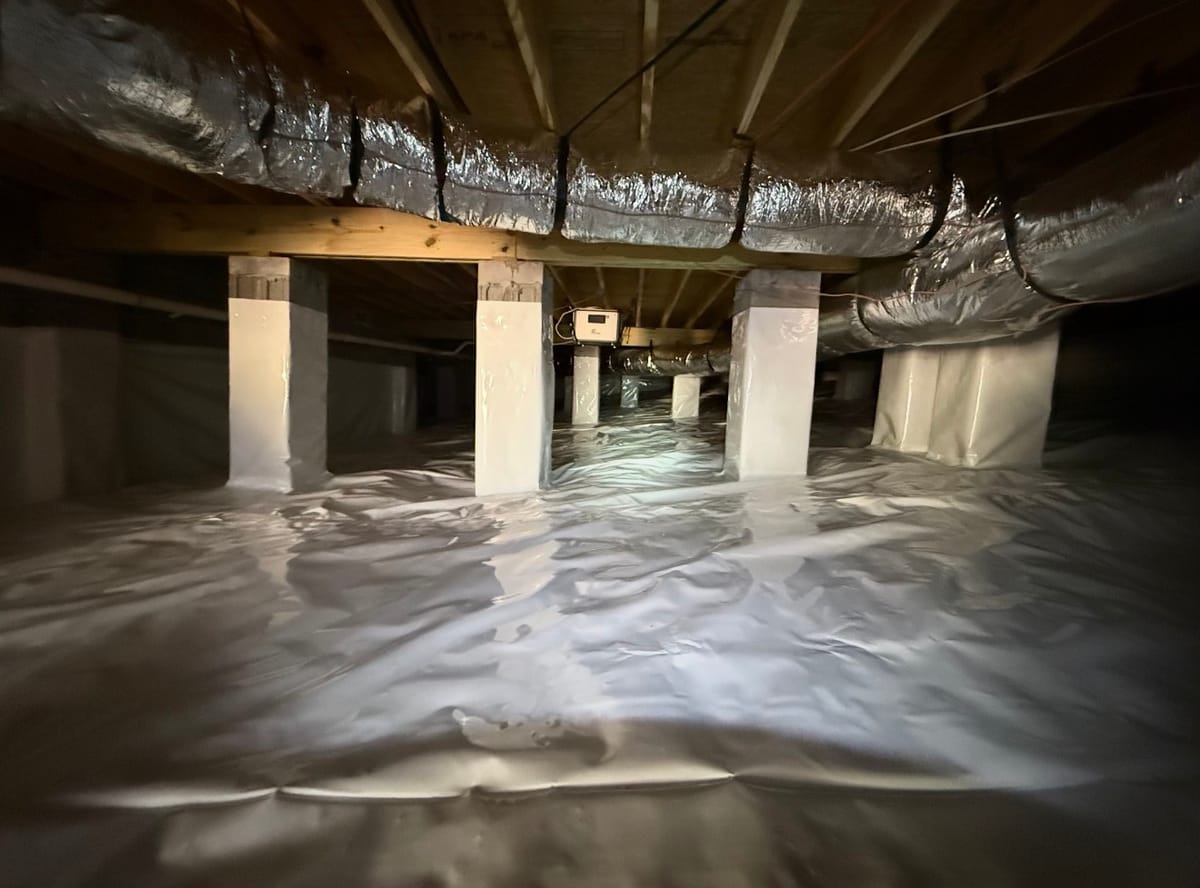
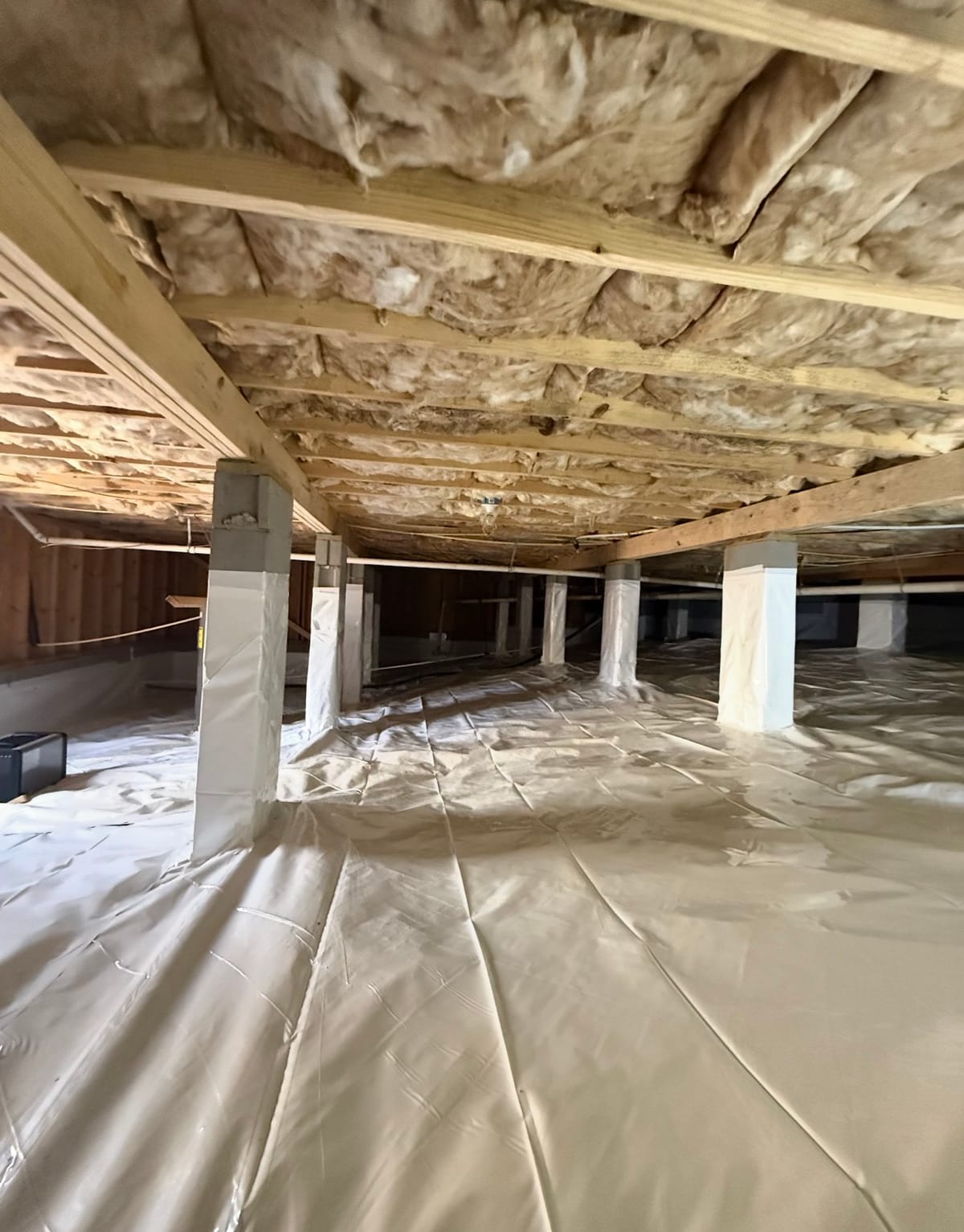
A ground liner helps address moisture rising from exposed soil, and a dehumidifier addresses humidity. Neither replaces drainage for bulk water entering or collecting beneath a home. At the same time, not every house needs full encapsulation or a full perimeter drain. I want the recommendation to fit the water source and the site, with an outlet you can identify and understand.
If you are considering crawl space drainage solutions, ask to see the discharge path before approving the work. I’m Nathan Johnson, serving homeowners through JHS Crawlspace Specialist in Spartanburg, Greenville, and the Upstate. Call me at 864-804-9384 or get in touch to discuss what you are seeing under your home.