Can New Crawl Space Liner Go Over Old Plastic?
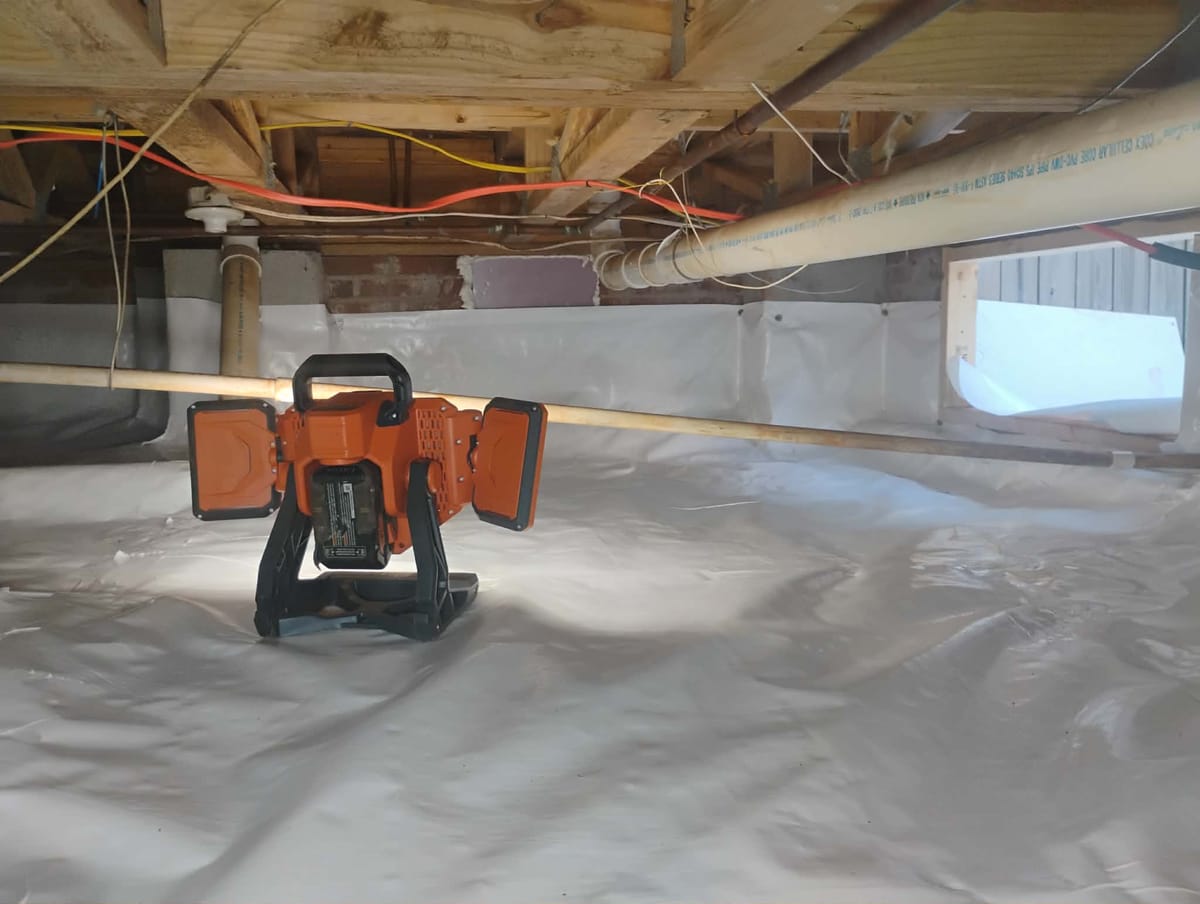
Yes, a new crawl space liner can sometimes go over old plastic, but I would not quote that work based on a photo of the plastic alone. Before deciding what belongs over it, we need to see what the existing ground cover actually covers, what condition it is in, and where the moisture is coming from.
I’m Nathan Johnson, owner of JHS Crawlspace Specialist. In Spartanburg, Greenville, and across Upstate South Carolina, our policy is straightforward: we remove debris, but we do not remove an existing vapor barrier. That does not mean every old layer is suitable to cover. Active water, unusual contamination, or hazardous material calls for a separate assessment and work scope before a new liner is considered.
What the old plastic can and cannot tell us
Black plastic is not automatically failed plastic. Dirt or age can change how a ground cover looks without telling us how it performs. Likewise, a sheet that resembles a tarp does not establish its vapor resistance by appearance alone. I look for exposed soil, loose overlaps, open seams, holes, displaced edges, and signs of actual moisture. A cover can look continuous from the access door while leaving soil exposed behind a pier.
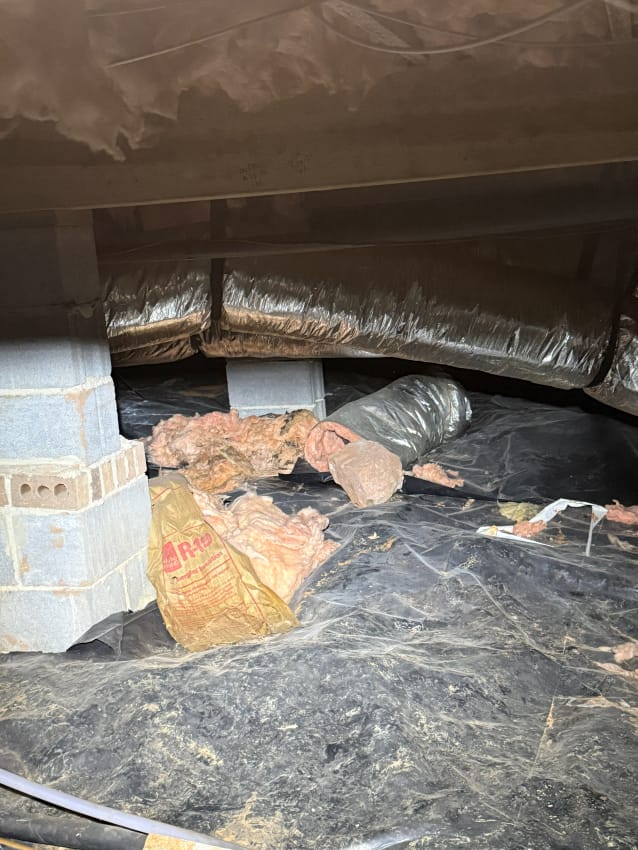
Ground vapor rising from soil and liquid water entering the crawl space are different issues. A liner can help limit vapor moving upward from the ground. It will not stop a plumbing leak or water flowing in after rain. If there is standing water or a wet path across the existing plastic, we need to understand that source before proposing another layer. Overlaying an existing barrier can be a reasonable retrofit option after assessment, not a default answer for every crawl space.
What to ask before accepting an encapsulation quote
A useful quote should make the plan for the old plastic unmistakable. If someone says the new liner will simply cover it, ask what they saw underneath and around the edges. If those areas were not accessible or visible, ask how that uncertainty affects the scope.
- What stays in place? Have the estimate state whether the existing vapor barrier remains. With JHS, debris removal does not include removing that barrier.
- What conditions were observed? Ask for photos of exposed soil, overlaps, seams, and any damp areas, along with an explanation of why a new liner is recommended.
- What will the new work cover? Confirm how ground coverage, joins between sheets, walls, and piers are addressed. A quote that only says “install plastic” leaves important details open.
- Is there liquid water? Ask whether the estimate addresses its source or whether water work needs separate assessment before lining.
- What could change the plan? Ask how suspected contamination, hazardous material, or conditions concealed by the old cover would be handled before work proceeds.
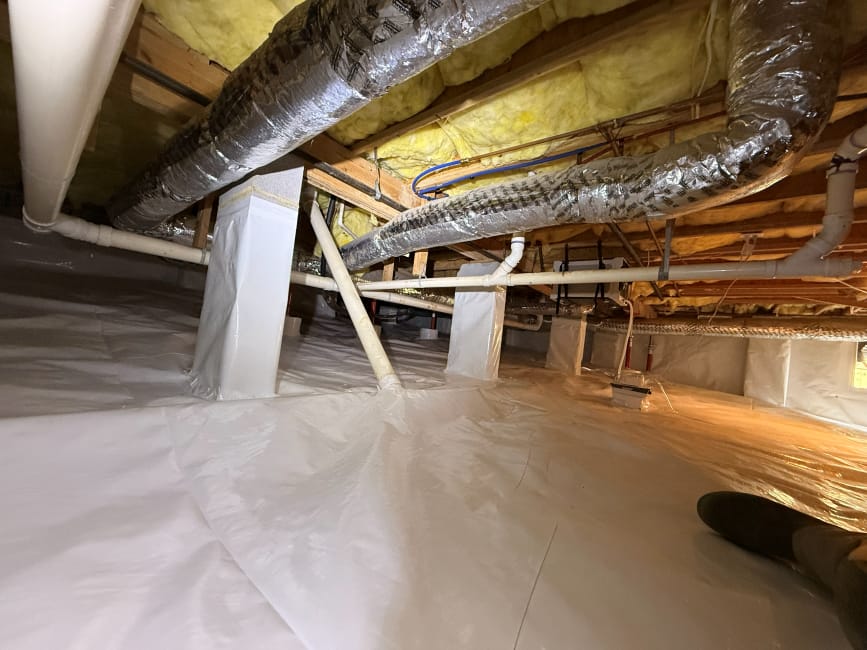
Not every home needs full encapsulation, drainage, or a new dehumidifier. The written recommendation should tie each proposed item to a condition found during inspection. If you are comparing a ground-cover improvement with a larger system, our crawl space encapsulation service page explains what that broader work involves.
For a free, owner-led inspection in Spartanburg, Greenville, or elsewhere in Upstate SC, call me, Nathan, at 864-804-9384 or contact JHS Crawlspace Specialist. I’ll show you what I find and explain the proposed scope before you make a decision.